
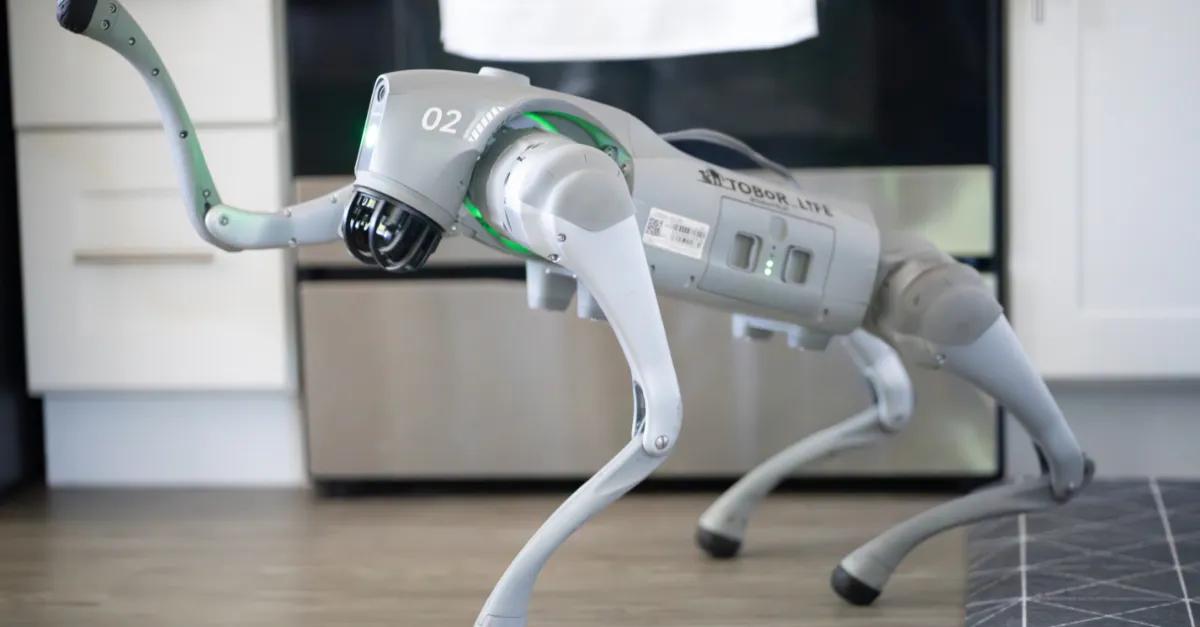
Unitree Robot Dog
Industrial quadrupeds are becoming part of the modern inspection stack. By moving sensors through dangerous and repetitive routes, they reduce worker exposure, increase inspection cadence, and produce more consistent site data. The strongest ROI comes from deploying them against clearly defined risks, workflows, and asset-availability targets.
Why Are Industrial Operators Moving Inspection Off the Human Route?
For industrial operators, a Unitree robot dog is best understood as a mobile sensing platform rather than a labor-replacement narrative. Its commercial value appears when it can carry cameras, gas detectors, LiDAR, or acoustic sensors through environments where sending a person is expensive, slow, or unnecessarily dangerous.
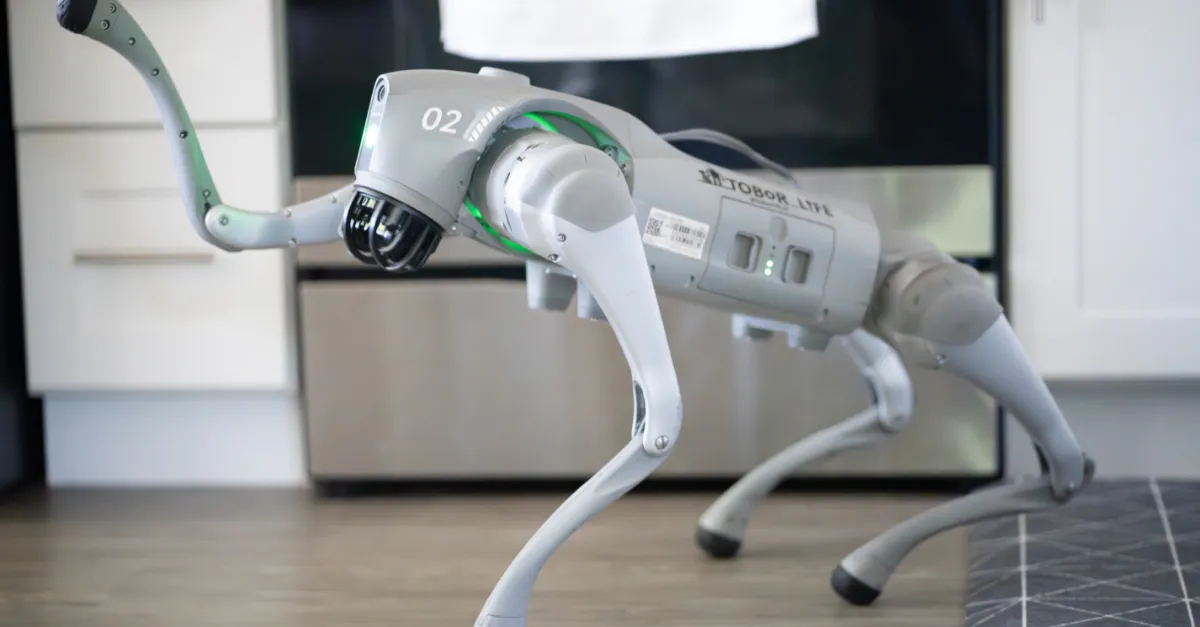
That distinction matters across oil and gas facilities, mines, chemical plants, utilities, and other asset-intensive industries. Most of these sites already run recurring inspection routes; the operational question is whether every round still requires a technician to enter the same high-temperature corridor, approach energized equipment, cross unstable terrain, or work near a potentially toxic release.
The real opportunity is to separate data acquisition from technical judgment. Robots collect repeatable field data, while experienced operators remain responsible for diagnosis, escalation, and maintenance decisions.
What Is the Full Cost of Manual Inspection?
The visible cost of an inspection round is labor. The actual cost includes the entire operating envelope required to place that employee near the asset safely.
Depending on the site, a routine audit may require permits, PPE, travel between assets, a second employee, lockout procedures, gas testing, confined-space controls, or a temporary production interruption. The economics become even less attractive when the technician spends most of the route observing healthy equipment.
Manual programs also constrain inspection cadence. When each additional round consumes scarce labor and introduces another exposure event, facilities tend to inspect at the frequency their staffing model can absorb rather than at the frequency their assets justify.
That creates three forms of hidden cost:
Safety exposure compounds every time personnel enter a hazardous or restricted operating area.
Detection latency increases when equipment is checked weekly or monthly rather than continuously or several times per day.
Maintenance teams lose time collecting routine data that could be spent interpreting anomalies and resolving higher-value reliability issues.
A quadruped does not need to eliminate a position to improve the business case. It needs to reduce enough route hours, access friction, incident exposure, and unplanned downtime to improve the cost of maintaining asset visibility.
How Are Utilities Using Quadrupeds for Substation Rounds?
Electrical infrastructure offers one of the clearest deployment patterns. Substations are structured environments with repeatable routes, high-value equipment, and credible exposure to energized systems.
A quadruped equipped with thermal and visible-light imaging can capture transformers, switchgear, connections, and supporting equipment from consistent positions. Repeating the same route under the same imaging geometry produces cleaner trend data than ad hoc handheld inspections, making it easier to identify emerging hot spots or changing equipment behavior.
The operating gain is not simply autonomous walking. It is higher-quality observability across assets that are costly to access and even more costly to lose.
Where Do Robots Create Value in Hazardous Zones?
Chemical plants, refineries, storage terminals, and mining operations frequently need an initial read on environmental conditions before personnel enter a work area. A mobile robot can carry gas, thermal, visual, and acoustic instrumentation into the zone while the safety team monitors conditions from a protected location.
This does not replace formal clearance procedures or hazardous-location requirements. It creates standoff distance and improves the quality of information available before a person is committed to the environment.
The strongest workflows include:
Screening for toxic or combustible gases following an alarm or process deviation.
Inspecting hot equipment without placing an employee inside the immediate thermal envelope.
Assessing damaged or unstable areas after an incident.
Monitoring remote infrastructure where routine access requires significant travel or escort time.
In these scenarios, the robot becomes part of the facility’s risk-control architecture rather than another piece of experimental hardware.
How Does Robotic Perimeter Security Change Site Coverage?
Large industrial campuses rarely have a pure security problem. They have a coverage problem: long fence lines, remote storage areas, poorly lit equipment zones, and recurring patrol routes that consume hours without guaranteeing that every anomaly receives equal attention.
A well-designed quadruped robot security payload can combine thermal and optical cameras, LiDAR, lighting, positioning, and communications hardware for scheduled rounds across outdoor or mixed-terrain environments. The robot documents the route and surfaces anomalies, while human security teams retain authority over assessment, escalation, and response.
That division of labor gives facilities more consistent overnight coverage without reducing security to a fully autonomous promise. It also creates a structured record of what the system observed, where it observed it, and whether the condition changed across successive patrols.
Why Are Research Teams Using the Same Platforms?
Industrial research groups are using quadrupeds to develop inspection autonomy, test sensor fusion, construct digital twins, and train navigation policies against real infrastructure. Unlike a laboratory-only platform, an industrial quadruped exposes algorithms to vibration, reflections, weather, terrain variation, connectivity gaps, and other operational edge cases that determine whether a system survives outside controlled conditions.
The physical datasets generated during these programs can become a strategic asset. Repeated route data supports anomaly detection, infrastructure mapping, predictive maintenance, and site-specific autonomy models that improve over time.
The strongest research programs therefore connect experimentation to a future operating model. They are not collecting data because the robot can move; they are collecting data because the facility has identified a decision that better field intelligence can improve.
How Should Operations Leaders Calculate ROI?
The ROI calculation should begin with the current route, not the robot’s purchase price.
Operations teams should quantify:
Fully burdened labor across technicians, escorts, supervisors, and security staff.
PPE, permitting, transportation, access controls, and administrative overhead.
The cost of delayed inspections, missed anomalies, emergency callouts, and shutdown exposure.
The economic value of increasing inspection frequency without adding another human exposure event.
The robotics side should include hardware, payload integration, connectivity, commissioning, batteries, maintenance, spare planning, operator oversight, and data infrastructure. This creates a defensible Total Cost of Ownership model instead of an artificial comparison between one employee’s hourly wage and one robot invoice.
The most useful metric is cost per decision-grade inspection. A low-cost patrol that produces inconsistent data creates limited operational leverage; a higher-quality robotic route can justify itself through repeatability, earlier detection, reduced exposure, and improved asset availability.
What Has to Be Engineered Before Deployment?
The robot body is only one layer of the system. A credible deployment requires a defined route, sensor package, network plan, charging model, operator authority, data workflow, maintenance process, and escalation policy.
Facilities should also define what happens when conditions fall outside the validated operating domain. Network loss, blocked paths, sensor degradation, low battery state, weather changes, and unexpected human activity require explicit recovery behavior rather than assumptions inherited from a demonstration.
This implementation work determines whether the program becomes infrastructure or remains a pilot.
Where Does Toborlife AI Fit?
Toborlife AI provides the U.S. distribution and implementation layer for Unitree-powered robotics, with the product configuration, logistics, payload requirements, facility constraints, and deployment objective treated as one operating system rather than separate purchase decisions.
For industrial buyers, that reduces the risk of acquiring capable hardware before the sensor stack, route economics, network coverage, or support model has been resolved. The result is a faster path from internal business case to a field program that operations, safety, and engineering teams can evaluate against the same metrics.
For teams already defining inspection routes, hazardous-zone workflows, or perimeter-security requirements, contact Toborlife AI to align the hardware and payload architecture before procurement decisions harden into integration debt.